Physio is over — now what? Training after discharge in Santa Ana
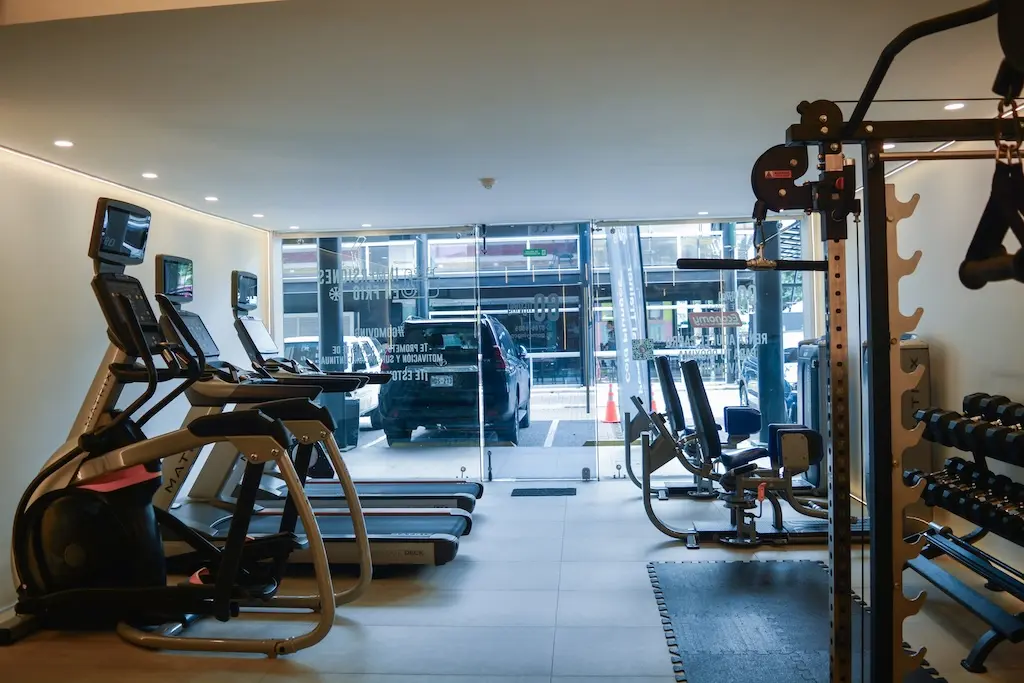
The last physiotherapy appointment tends to end the same way for almost everyone: the pain is gone, you are discharged, you leave with a sheet of four or five exercises and the advice to “keep moving.” You walk out happy. Two weeks later, at home, the awkward question shows up: keep moving how, exactly?
That gap between discharge and getting your life back is real, and a large part of the final outcome is decided inside it. This article explains what happens during that stretch, why strength and mobility are what hold on to everything physiotherapy achieved, and how a training plan after discharge is actually built.
One thing to be clear about up front, because it matters: this is training, not physiotherapy. GoMoving does not diagnose, does not treat injuries, and does not replace your physiotherapist or your doctor. What it does is pick up where they left off and build physical capacity on top.
The gap after discharge
Discharge means the tissue has healed and pain is no longer the main problem. It does not mean you are back to who you were before the injury.
After weeks of relative rest or limited movement, it is normal to reach discharge with less strength in the affected leg or shoulder, less confidence on that side, and movement patterns that quietly reorganised themselves around avoiding pain. Those adjustments were useful while it hurt. Kept for months, they become the source of the next complaint.
And here is the trap: the absence of pain is not the same as full recovery. That is precisely why so many people feel fine, jump straight back to what they did before — running, Thursday football, the weights class, picking up a toddler — and are back where they started a few weeks later.
Why strength and mobility are the logical next chapter
After discharge, the goal changes. It is no longer about calming a symptom; it is about raising the ceiling of what your body can handle so that everyday demand sits comfortably below it.
That takes three things, in this order:
- Restoring full range of motion in the affected joint and its neighbours, which almost always stiffened up too.
- Rebuilding strength with progressive load, on the injured side and the healthy one, because a side-to-side imbalance is one of the clearest predictors of a setback.
- Retraining the pattern, so that squatting, pushing, pulling, climbing stairs or running feel automatic again rather than supervised.
On top of that comes stability and proprioceptive work — re-teaching your body where it is in space — which is what saves you on an uneven Santa Ana sidewalk or a sharp turn on the field.
How a one-on-one plan is built
At GoMoving, in Momentum Lindora, Local 11, Santa Ana, the process starts with an initial assessment with Adrián Garita. That first appointment covers:
- Your full history, not just the recent injury: previous injuries, surgeries, how long you were limited.
- What the discharge says. Bring the report, the instructions and any restrictions you were given. It is the best information available and it sets the starting point.
- How you move today: range, control, differences between sides, which movements still make you hesitate.
- Your real goal, in your own words: run again, carry the groceries without fear, play the company tournament, sleep without the shoulder complaining.
- Your life: schedule, work, how many hours you sit, stress levels, how many days a week you can genuinely train.
The plan is built from that. And it is adjusted session by session, which is the part no downloaded program can do: if an exercise left you sore the next day, the load or the range changes; if the injured side has caught up with the healthy one, the level goes up; if you slept badly or had a brutal week, the session adapts instead of being forced. Progression is a decision made with that day’s information, not a table written a month ago.
Sessions are one-on-one personal instruction at $50 per session, and the hours are Monday to Friday, 5:00 a.m. to 8:00 p.m., and Saturday, 9:00 a.m. to 12:00 p.m.
Coordinating with whoever discharged you
A post-discharge plan works better when it does not happen behind the back of the professional who treated you. Three practical suggestions:
- Bring the instructions and restrictions in writing. If your physiotherapist said “no impact yet” or “nothing overhead for now,” that is respected exactly as written, with no reinterpretation.
- Tell your physiotherapist or doctor that you are starting to train. It is useful information for them and for you, and it prevents contradictory messages.
- If a clinical question comes up, the clinician answers it. When a new symptom appears, the response is not to swap the exercise for a similar one — it is to go ask.
Signs it is time to go back to your clinician
During training after discharge, some muscle soreness after a new session is expected. The following are not, and they call for stopping and consulting your physiotherapist or doctor:
- Sharp, localised pain in the injured area, especially if it appears suddenly
- Swelling, heat or redness coming back
- Pain that wakes you at night or does not ease with rest
- Losing range of motion you had already regained
- Numbness, tingling or weakness that radiates
- A feeling that the joint gives way or buckles under load
Reading pain correctly is part of the job. It is not about toughing it out, and it is not about panicking — it is about knowing which of the two applies.
The mistakes that repeat most often
- Going back too soon to your old intensity, because it does not hurt any more.
- Following a generic program from the internet, designed for a body and an injury that are not yours.
- Quitting once you feel fine, right when the capacity that prevents a setback was starting to build.
- Ignoring the body’s signals instead of using them to adjust.
- Skipping prevention: the plan does not end the day you return to your activity.
How to start
If you were discharged recently — or months ago and never worked out what came next — the next step is an initial assessment. Message WhatsApp at +506 8705 9905, describe the injury, what you were told at discharge, and what you want to do again without hesitating. Adrián will tell you honestly whether training after discharge is what you need right now.
Take the next step. Message Adrián on WhatsApp mentioning this article and book your initial assessment this week.
GoMoving Costa Rica · Momentum Lindora, Local 11, Santa Ana · 4.9 ★ from 28 reviews on Google.